ALGM Beauty Bar
Blog·Skin Rejuvenation·

Can I Get Microneedling With Active Acne? Why Dermatologists Say Wait

By the ALGM Beauty Bar team · Clinically reviewed by Dr. Aloysius Fobi, MD, Medical Director

Can I Get Microneedling With Active Acne? Why Dermatologists Say Wait

Medically reviewed by Aloysius Fobi, MD, Medical Director | Reviewed by Lily Gazaryan, Founder and CEO | 15+ Years Medical Industry | Microneedling-Certified | Last Updated: September 2026 Quick answer: No, you should not get standard microneedling over active acne. Dermatologists generally advise against microneedling on active inflammatory breakouts because the needles can drag bacteria across your skin, worsen inflammation, and raise the risk of infection and fresh scarring. Wait until your skin has been clear for two to four weeks. There is one exception worth knowing, covered below: radiofrequency (RF) microneedling, which is a different procedure that is now being studied and used on active acne itself. The distinction that trips people up: standard microneedling is excellent for acne scars, but it is not a treatment for active acne. Here is the timing, the safety rules, and how to prep your skin.

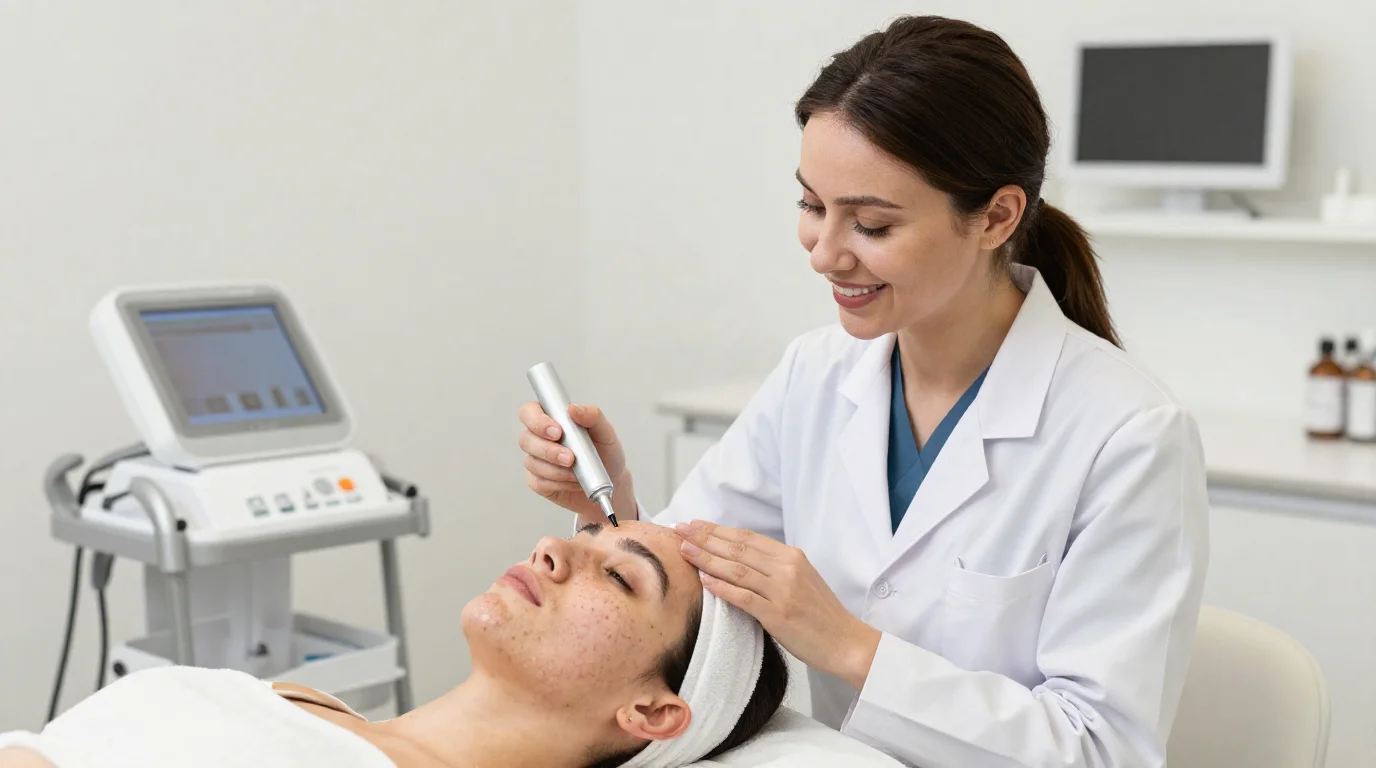
Standard microneedling on active acne spreads bacteria, so dermatologists say wait

Microneedling creates thousands of controlled micro-channels across the treatment area. On healthy or scarred skin, those tiny punctures trigger a collagen-building response, which is why the treatment is also called collagen induction therapy.

When active breakouts are present, the same needles work against you. Passing over inflamed pustules, cysts, or papules, the pen can puncture those lesions and carry the bacteria (Cutibacterium acnes, formerly Propionibacterium acnes) into surrounding skin. That can seed new breakouts in areas that were clear, intensify existing inflammation, and leave post-inflammatory hyperpigmentation or new scarring. Inflamed skin is already in a heightened immune state, and adding controlled trauma on top of it can prolong both the breakout and the recovery.

What dermatology guidance actually says about microneedling and active acne

A common search is whether the American Academy of Dermatology (AAD) recommends microneedling for active acne. The honest answer: the AAD's updated acne management guidelines did not issue a recommendation on microneedling, because the available clinical evidence was judged insufficient to recommend for or against it as an acne treatment. There is no formal AAD or society directive that either endorses microneedling over active acne or bans it.

What is well established is the clinical caution. Active inflammatory acne is a standard exclusion in microneedling practice and in the clinical trials studying it, for a concrete reason: passing needles over active pustular, cystic, or papular lesions can spread bacteria, worsen inflammation, and increase the risk of hyperpigmentation. That is why dermatologists and aesthetic providers routinely treat an active breakout as a reason to wait.

Microneedling is a well-supported option for atrophic acne scars (ice pick, boxcar, and rolling scars) once the active inflammatory phase has fully resolved. The standard sequence is acne control first, then microneedling for the residual scarring.

The RF microneedling exception: radiofrequency microneedling is being used on active acne

Here is the nuance that most articles skip. Radiofrequency (RF) microneedling is a different procedure from a standard microneedling pen. Insulated needles deliver radiofrequency energy into the deeper skin, and that heat does two things a plain pen does not: it shrinks overactive oil glands and it downregulates the inflammatory signals that drive breakouts.

Because of that mechanism, RF microneedling has been studied and used on active acne itself, well beyond its scar-treatment role. A 2025 retrospective analysis in PMC reported that RF microneedling was a safe and effective option for moderate-to-severe active acne, with inflammatory lesions (nodules and pustules) responding better than non-inflammatory ones. A separate trial pairing RF microneedling with oral isotretinoin found the combination improved acne vulgaris outcomes.

If your goal is clearing active acne rather than treating scars, RF microneedling is worth raising at a consultation so a provider can tell you whether your skin is a fit. Two caveats keep this honest:

  • These are clinic and study settings with strict screening, device selection, and provider oversight. RF microneedling for active acne is a physician-guided decision that requires screening first.
  • It does not make a standard microneedling pen safe over active breakouts. The exception is specific to the RF device and its mechanism.

When it is safe to microneedle after a breakout: wait until skin is clear for two to four weeks

For standard microneedling, the general guideline is to wait until your skin has been free of active breakouts for at least two to four weeks. The exact timeline depends on how severe your acne was and how your skin has responded to treatment.

A provider should evaluate your skin at a consultation to confirm you are ready: checking for any active lesions, how recently the last breakout occurred, and the condition of your skin barrier. If your acne is well managed and your skin is calm and stable, you can proceed. If there is doubt, a responsible provider recommends waiting rather than risking complications.

Active acne vs acne scars: what microneedling actually treats

This is where people get confused, so it is worth stating plainly. If you have both active acne and scarring, the sequence is the same: get the breakouts under control first, then start microneedling for the scarring once your skin is clear and stable. The two categories:

  • Active acne (do not treat with standard microneedling): current pimples, pustules, cysts, and inflamed lesions. Standard microneedling is not appropriate while these are present.
  • Acne scars (safe to treat): the textured marks left after breakouts heal, including ice pick, boxcar, and rolling scars, plus post-inflammatory hyperpigmentation. Microneedling is highly effective for these.

Treat the acne first: what clears breakouts before microneedling

If microneedling for scars is the long-term goal but your acne is not yet controlled, several treatments can prepare your skin. Once breakouts subside and the skin stabilizes, you can move into a microneedling plan for the scarring, a phased approach that gives you the best shot at smooth skin without setbacks. The treatments that help clear acne first:

  • Professional facials built for acne-prone skin to calm inflammation and reduce breakouts.
  • Chemical peels with ingredients like salicylic acid to unclog pores and speed cell turnover.
  • Medical management from a dermatologist or provider, such as benzoyl peroxide, topical retinoids, or oral antibiotics, to bring persistent acne under control.

Every microneedling plan at ALGM starts with a consultation in Van Nuys

At ALGM Beauty Bar in Van Nuys, microneedling begins with a consultation rather than a booked treatment. Every plan is set under the medical direction of Dr. Aloysius Fobi, MD, so a provider can assess your skin, confirm whether an active breakout needs to clear first, and map the right sequence for your goals before any needle touches your skin.

If your acne is not yet under control, that same consultation is where the phased plan gets built: manage the breakouts first, then move into microneedling for the residual scarring once your skin is clear and stable. If your skin is not ready, the team will tell you and recommend waiting.

Book a microneedling consultation at ALGM Beauty Bar in Van Nuys

ALGM Beauty Bar offers standard microneedling, RF microneedling, and PRP microneedling at our Van Nuys location, serving clients across Los Angeles, Sherman Oaks, Studio City, North Hollywood, Burbank, and Encino. All treatments are performed under the medical direction of Dr. Aloysius Fobi, MD, and founder Lily Gazaryan is personally microneedling-certified.

If your skin is not ready, the ALGM team will tell you. For the treatment itself, see our microneedling service page; for budgeting, see our guide to microneedling cost.

Address: 7400 Van Nuys Blvd, Suite 112, Van Nuys, CA 91405 · Phone: (747) 755-5333 · Book: Schedule online.

Frequently asked questions

Does the AAD recommend microneedling for active acne?

The AAD's updated acne guidelines did not make a recommendation on microneedling, because the clinical evidence was judged insufficient to recommend for or against it as an acne treatment. Separately, standard dermatologic practice is to avoid microneedling over active inflammatory lesions, since the needles can spread bacteria and worsen inflammation. Microneedling is a well-supported option for atrophic acne scars once the active acne phase has fully resolved and the skin has stabilized for at least two to four weeks.

Can microneedling spread acne bacteria?

Yes, that is the main safety concern. The needles can puncture active lesions and carry bacteria such as Cutibacterium acnes into surrounding skin, seeding new breakouts in previously clear areas and worsening inflammation. This is why dermatologists recommend treating active acne first.

Is RF microneedling safe for active acne?

RF microneedling is a different procedure and has been studied for active acne, with clinical evidence showing it can help moderate-to-severe inflammatory breakouts under physician oversight. That does not make a standard microneedling pen safe over active acne. Whether RF microneedling fits your skin is a decision for a provider at consultation.

How long should I wait after a cystic breakout to get microneedling?

Cystic acne is deep and inflammatory. Wait until the cyst has fully healed and the area is no longer red, tender, or inflamed, usually at least two to four weeks after it resolves. Your provider should evaluate your skin before scheduling.

Will microneedling worsen my acne scars if I still get occasional pimples?

Occasional minor pimples are different from active widespread acne. As long as your skin is generally clear with no inflamed lesions in the treatment area, standard microneedling should not worsen your scars. Your provider will assess this at your consultation.

Can I get microneedling for acne scars on my back or chest?

Yes, if those areas are also clear of active acne. Body microneedling follows the same rule as facial: the area must be free of active inflammatory lesions for at least two to four weeks before treatment. Body areas are typically priced separately from the face.

Can microneedling cause a breakout?

Some patients see minor breakouts in the days after a session as part of the skin's purging process. These are usually mild and resolve on their own. That is different from spreading active acne, which is why treatment should not be performed over inflamed lesions. Sources: American Academy of Dermatology updated acne management guidelines (evidence insufficient to recommend microneedling); microneedling for acne and acne scars clinical review (PMC10549865); retrospective analysis of RF microneedling for active acne vulgaris (PMC13457912); RF microneedling with oral isotretinoin for acne vulgaris (PMC9993193); Dermatology Times microneedling and acne outcomes review; Yale Medicine microneedling fact sheet. Disclaimer: This information is provided for educational purposes and is not a substitute for professional medical advice, diagnosis, or treatment. Microneedling protocols vary by patient and clinic. Please schedule a consultation with our team to discuss your individual skin concerns.

Related Services

Want to talk through this in person?

Read about the treatment at ALGM Beauty Bar, then book a one-on-one consultation with our team.

Schedule

Have a question about your treatment?

Reach our team directly. We will walk you through what is realistic, what it costs, and what to expect, before you book anything.

This information is provided for educational purposes and is not a substitute for professional medical advice, diagnosis, or treatment. Please schedule a consultation with our team to discuss your individual needs.